


We didn’t have a plan when we started Company Policy.
That’s not false modesty, it’s just the truth. We started in the middle of a pandemic, which meant the typical uncertainty of starting something new was felt tenfold. We made it up as we went. And now five years later, as far as we can tell, that’s still the only honest way to operate.
A lot of the five-year reflections you read are written backwards: here’s where we started, here’s what we learned, here’s who we are now. And sure, we have some of that to say. But what we’re more interested in is the forward part. Not a roadmap. Not a manifesto. Just the things we want more of, after five years of doing this. The ideas that excite us. The practices we’re leaning toward. The kind of work and people we’re looking for.
Call it a signal. An honest one.
More making. Less screen.
There’s something we keep coming back to. PlayLab, Inc. built an installation for the Venice Biennale: a forest of handcrafted wood structures commissioned for Golden Goose. It was so far from what most people think of as branding. And it was, without question, one of the most brand-expressive things we’d seen in years.
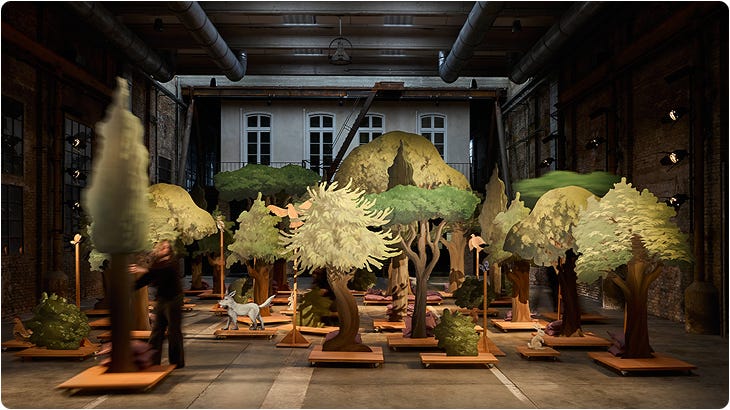
That tension is something we’ve been sitting with. So much of what we do lives on screens. It gets sent as a file, compressed, uploaded, resized. The physicality of it, if there ever was any, gets lost in transit. But with the ultra-saturation of digital technology and rise of AI, we are seeing a shift: a return to our roots. A desire for something more tangible.
We want more work that we can feel with our hands. Activations. Storefronts. Installations. Things that require a set designer or a fabricator. It doesn’t have to be large. It just has to exist in the world rather than on it.
There’s nothing wrong with digital work: that’s here to stay. But as people shift their behaviors off-screen, we must follow. There’s a window of opportunity for brands to meet audiences where they’re at, in physical spaces. And this is the most impactful work we’re seeing lately.
We’ve had the chance to do some of this work lately and we want more.
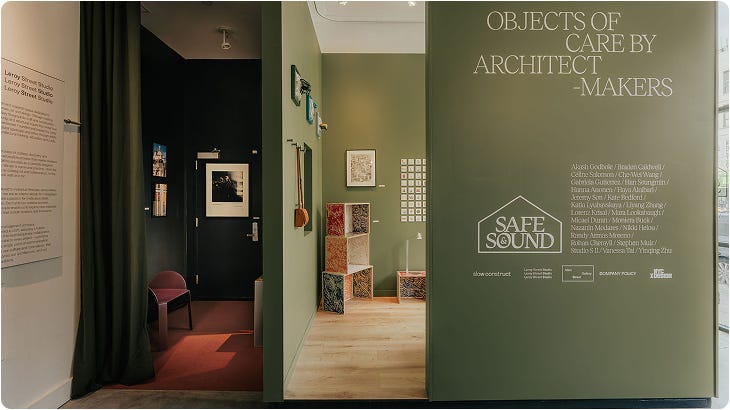
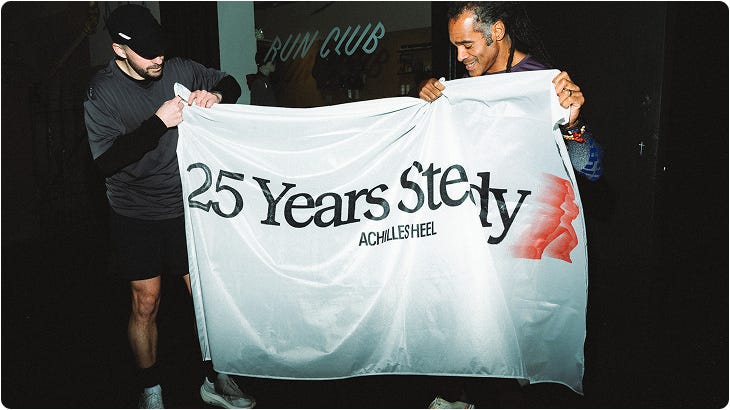
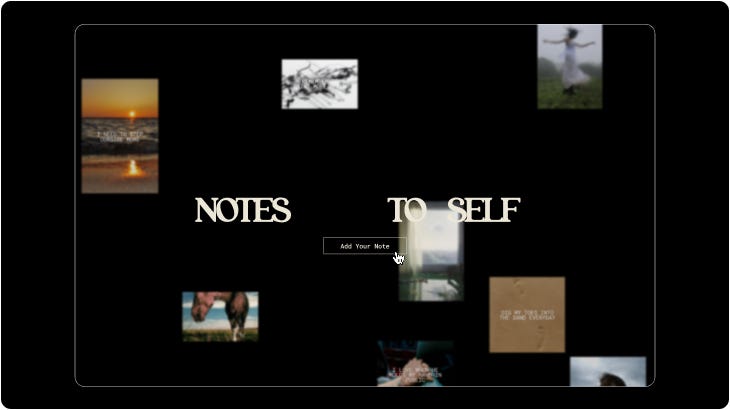
More cultural moments. Fewer deliverables.
Our dream project, if we’re being completely honest about it, is the Olympics.
Not because it’s big. Because it’s one of the few briefs on earth where the design has to hold up across every culture simultaneously, and where, if you get it right, it lives forever. The branding for the Mexico City 1968 Olympic Games lives beyond its moment as one of the most iconic design systems to date.
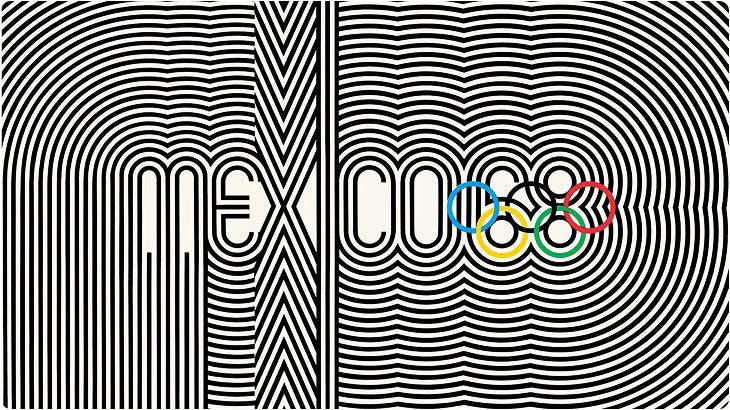
The geometric line patterns showed up everywhere: painted on stadium walls, applied to city sidewalks, printed on clothing, and even adopted into protest art. The branding also had a lasting effect on national infrastructure: it laid the visual foundation for the Mexico City Subway system. A beautifully designed event identity became the grammar that other designers borrowed for decades.
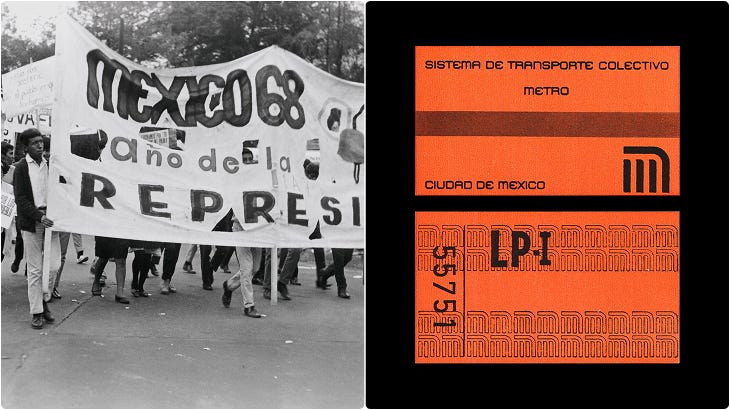
That’s what we’re drawn to: work that’s designed for a shared moment and ends up meaning something longer than the moment itself.
It doesn’t have to be the Olympics. It could be a sports campaign, a cultural institution, a city identity, or a festival. What we’re really saying is: we want to work on things that bring people together, and where the design is part of why that works.
More changing lanes.
One of the things that makes Company Policy unusual, we think, is that we’ve never really organized ourselves by discipline. Designers write. Strategists concept. The person who handles words sometimes ends up shaping the visual direction. We don’t love the phrase “multidisciplinary” because it sounds like a credential, but the spirit of it is real.
The traditional structure: the writer writes, the designer designs, the strategist thinks and the designer executes, made sense when the tools were separate and the work took place in sequence. It doesn’t really map onto how ideas actually develop. The best thinking we’ve ever done as a team has happened in the overlaps.
Going forward, we want more of that. We want to hire people who don’t stay neatly in their categories. Designers who write. Writers who have strong visual instincts. Strategists who can get into execution. And we want to work with clients who trust that this kind of multi-faceted approach produces better outcomes.
We’d rather be the dumbest people in a room full of curious generalists than the obvious experts in a room full of lanes.
More distinction. Less sea of sameness.
There’s a pattern we’ve watched repeat itself for years: a brand needs a new identity, so they find an agency whose portfolio looks like the thing they want to become. They reference three competitors. They ask for something “fresh” that still feels familiar. The agency delivers. The brand launches, and the industry gets more uniform than it was before.
We understand the logic, but it’s also how you end up with a market full of brands that look like they were designed by the same person. Because in a lot of cases, they were.
What we’ve found is that our best work tends to happen when we come in without a template. When we’re working in an industry we haven’t touched before, we can’t rely on what we’ve seen done. We have to actually think. That unfamiliarity, which can feel like a liability going in, usually turns out to be the point. It forces a perspective that insiders have stopped being able to see.
Going forward, we want more of that friction. More briefs where we have no obvious precedent to lean on. More clients who are less interested in what we’ve done for someone like them, and more interested in what we might do if we approached them like no one else has.
Distinction isn’t a style. It’s a decision to stop looking sideways.
More belief in writing.
Here’s something we’ve started to notice, and we think it matters: people do read.
We hear all the time that attention is dead, that long-form is finished, that nobody has time for words. We don’t believe it. We think people don’t read bad writing, or writing that doesn’t give them a reason to care. But when you make someone care, when the first sentence earns the second, they will follow you for a long time.
Substack itself is some evidence of this. So is the response we’re getting to this publication. There’s a quiet hunger for something more sustained than a caption or a headline. We want to be part of feeding that.
For us, writing isn’t a deliverable we hand off. It’s part of the thinking. The brands we’re most proud of are the ones where we spent real time on voice, on language, on what this company actually sounds like when it opens its mouth. That work is invisible when it’s done well. But when it’s missing, everything else feels thin.
We want to do more of it, and with clients who understand why it matters.
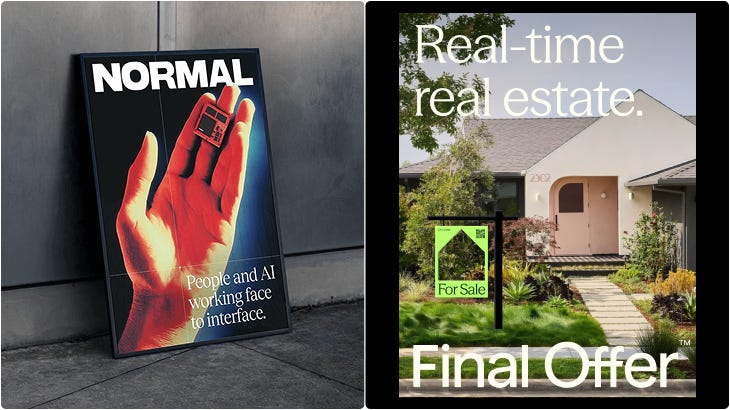
A last thing about the ever-changing future.
Five years ago, when we were starting, a lot of people assumed things would return to normal eventually. They didn’t, really. They just became a different kind of normal, with a different set of pressures and a different horizon of uncertainty.
The next five years will probably be the same. AI is doing to our industry something like what Photoshop did, except faster and louder. Nobody knows exactly what it means. The people who pretend otherwise are either selling something or afraid.
What we do know is this: the tools will keep changing. The “why” behind making things won’t.
We’re not afraid of what’s coming. We’re more interested in staying useful, staying curious, and making things that are worth making. Whether that’s an Olympic identity, a handbuilt installation, or a brand story that someone actually reads start to finish.
We still don’t have a plan. We have a direction. And that, five years in, feels like enough.
All of this resonated way too much! Super inspired by you guys and can't wait to see what the future holds for ya'll!